

About Me
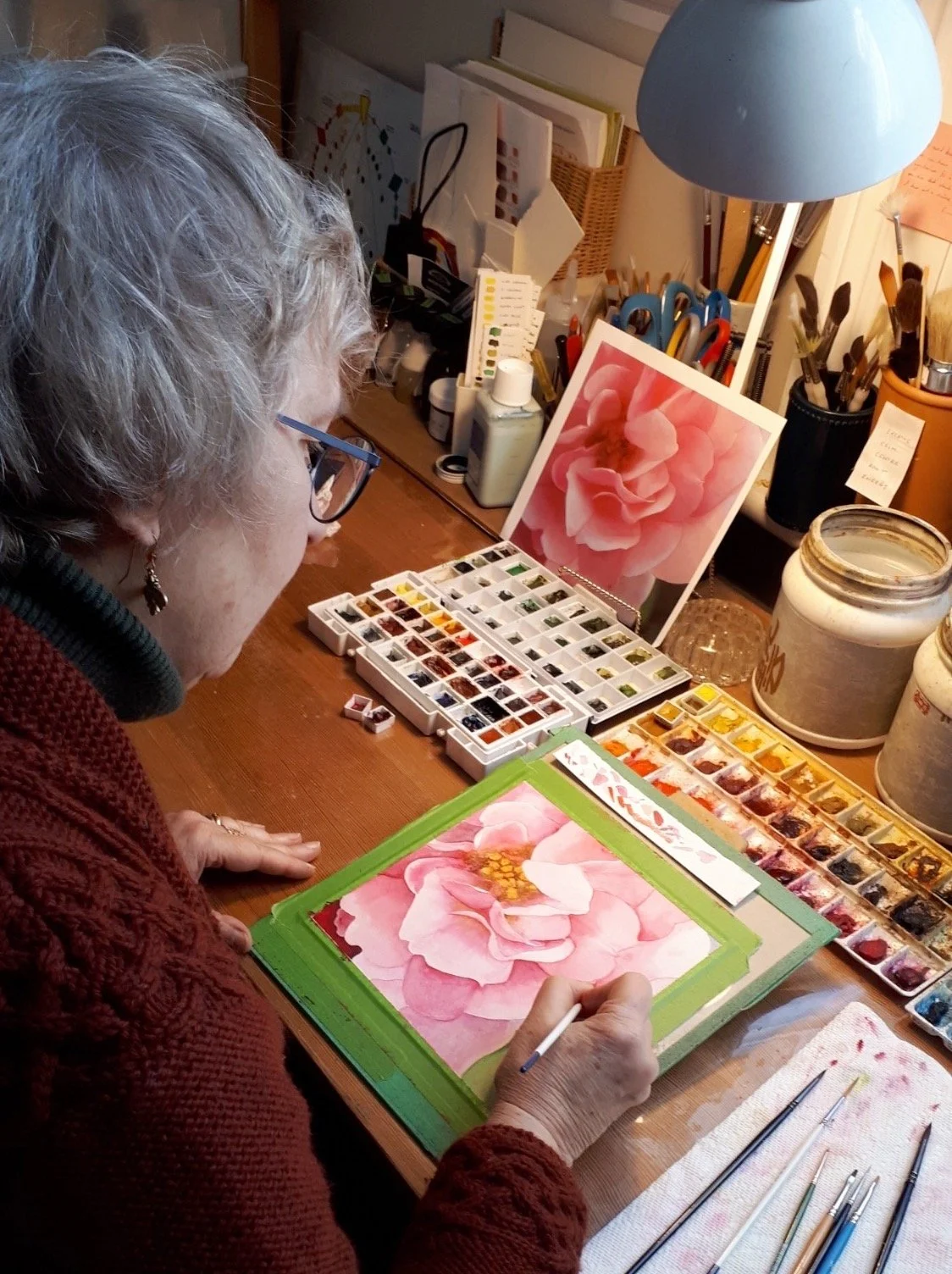
I come from a family of artists and artisans, but did not take up brushes myself until ill health forced me to retire in 2017.
I first started painting portraits to enable a much-needed human connection that was missing because of the isolation induced by my illness.
I discovered that to paint someone’s face was a very powerful, almost intimate, process imbued with a strong sense of closeness and appreciation of the person.
I moved from painting living family members and friends to ancestors, and discovered a connection with my former professional self in the process.
My job as a bioarcheologist had been to reconstruct life histories of ancient peoples from their skeletons, metaphorically bringing them back to life.
The process of creating a portrait feels a little bit like that, and the scientist in me values detail, be it in the faces of family, friends, flowers or animals.
My use of watercolour reflects a balancing of my identity as a scientist who values the infinite detail of the natural world and my understanding of how the human spirit interacts with both geological and biological worlds.
The History of Watercolour
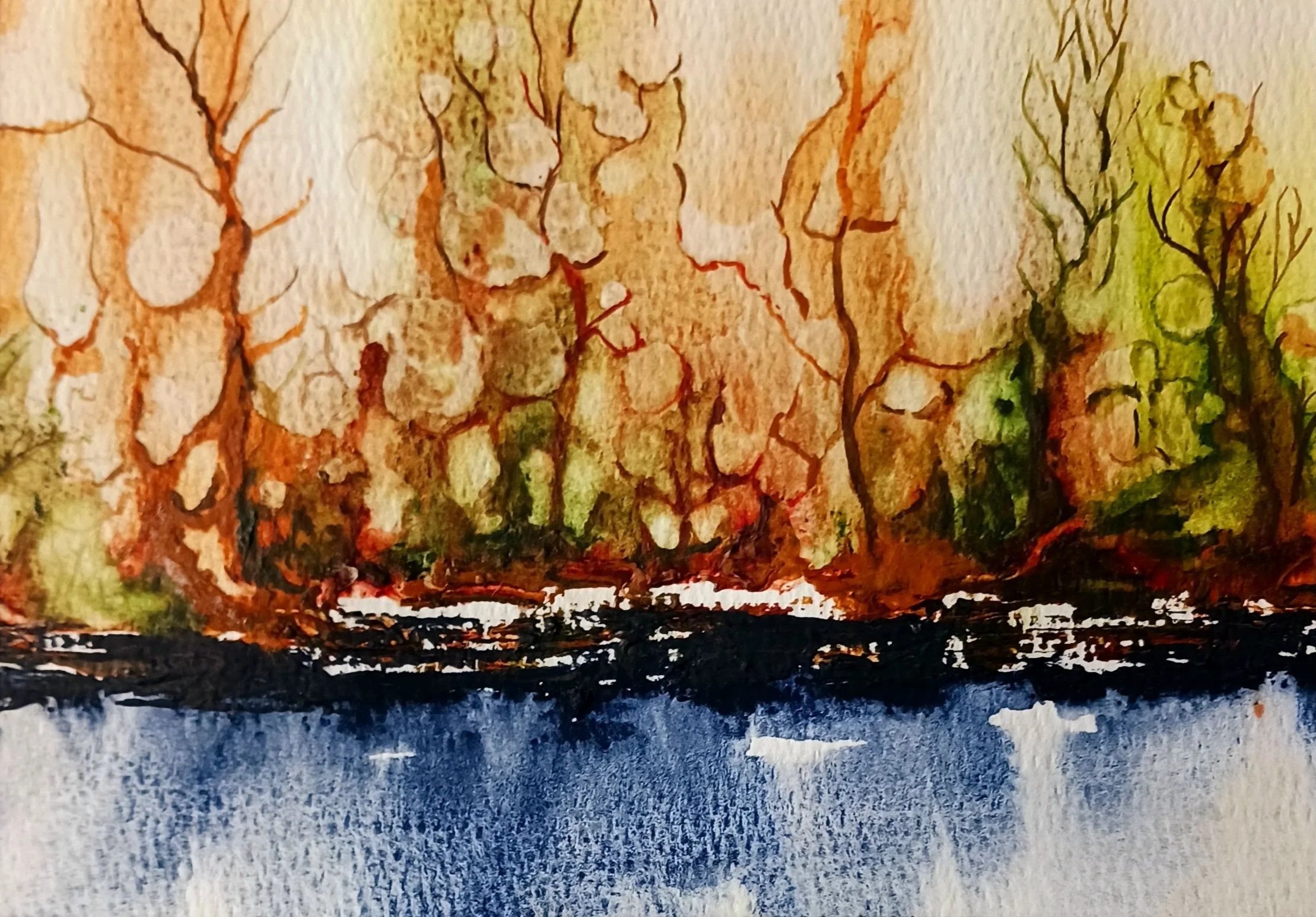
Natural pigments mixed with water were the materials used in the earliest form of artistic expression, i.e., Paleolithic cave art. The medium was used on papyrus circa 3000 BC by ancient Egyptians (who mixed it with binders) and on vellum for the creation of Medieval manuscripts, but was not used on paper until the Renaissance.
Sepia
All commissioned portraits are painted in sepia, a rich, reddish brown pigment, which originally came from the ink sac of the Sepia cuttlefish (the fish and its cuttlebone also have antibacterial properties and are used in natural and homeopathic medicine). Sepia ink has been used in art since ancient times and by masters such as Da Vinci and Rembrandt for their drawings.
The development of photography in the 19th century saw its use in the developing process to improve permanency. It is perhaps this application that we most associate the colour with a vintage appearance.
Modern synthetic pigments, such as those formulated by the brand I use (Schmincke), have replaced the natural ones, which not only help to save the cuttlefish but also improve its colourfastness and permanence. Nonetheless, ANY watercolour on paper should always be placed away from direct sunlight.